Sustainable Tourism Observatory: Trilateral Formal Agreement between Greece, Albania and FYROM for the protection of Prespes Lakes.
February 7, 2010
Posted By: Manolis Psarros
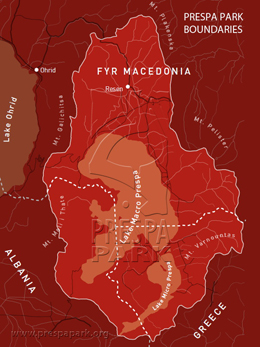 Greece, Albania and the Former Yugoslav Republic of Macedonia (FYROM) signed a formal agreement for protection of the unique Prespes Lakes last week, on the anniversary of World Wetlands Day and exactly 10 years since the declaration of the Balkans' first transboundary eco-agreement.
The key aim of the agreement is to facilitate trilateral cooperation to ensure comprehensive protection of the Prespes Lakes wildlife and sustainable development in the Prespes Park area, as well as to develop a comprehensive plan for managing the waters flowing into the Prespes basin.
The history of the agreement
The drive for the signature of the agreement was revived last November by Greek Prime Minister George Papandreou, who organised an informal summit of the three countries' premiers at the Ramsar-protected Prespa National to discuss cooperation in the management of the Prespes Lakes Park. The effort was launched at a trilateral summit on February 2, 2000, symbolically held on World Wetlands Day, by the then prime ministers Costas Simitis of Greece, Ilir Meta of Albania and Ljubco Georgievski of FYROM, in a declaration that designated the Prespes region a National Park, the first of its kind in the Balkans. The aim of the park is to protect several the region’s rare wildlife, as well as enhancing cooperation among Balkan countries.
After the declaration, an informal coordination committee was set up by the three countries, which from 2001 until the present has advanced the planning and execution of joint programs for protection of the area and improvement of the local residents' standard of living. The development of the Strategic Action Plan for the Sustainable Development of Prespes Park, financed by Greece, was one of the first major achievements of this collaboration.
In the context of the decade-long cooperation, many local agencies (chiefly municipalities and NGOs) have been working together to carry out joint programs, often funded by international financial organisations. Even though there has not been a legally binding agreement so far, such initiatives have resulted in significant joint actions that have promoted both sustainable local development but also brought the populations of the neighbouring countries closer together.
Prespes: A treasure chest of biodiversity
The Prespes basin stands out for its exquisite biodiversity, which has been acknowledged at European and global level not only for its rich fauna and flora, but for the quality and rarity of the species found there.
More than 260 species of birds, 1,500 species of plants, 23 species of fish and 60 species of mammals make up Prespes' rare biodiversity
The Lesser Prespa Lake and Greater Prespa Lake of Florina, northwestern Greece form a unique ecosystem and constitute a natural border between the three countries.
The two tectonic Lakes, among the oldest on Earth, are home to the Mediterranean's most ancient species of trout, and also the short-horn pygmy cow, both of which are threatened with extinction.
The Prespes Lakes are also among the 10 most important wetlands of the Mediterranean, while eight of the 11 fish species native to the lakes are endemic and not found anywhere else in the world.
The area is a large basin at an altitude of 850m which contains two lakes, Mikri (Lesser) and Megali (Greater) Prespa. Megali Prespa is today located in Greece, Albania and FYROM while Mikri Prespa is entirely located within Greece and Albania.
According to the UNESCO World Heritage Center, the area is characterized by outstanding natural beauty and has been inhabited without interruption since antiquity (with traces of ancient habitation in the area of "Lemos" and on the island of Agios Achilleos) to the present day.
The local population has closely associated the area, its history and its natural beauty with myths, legends and traditions.
The Prespes region contains the highest degree of species biodiversity in a corresponding surface area in Europe. It is a unique lake landscape of outstanding natural beauty that includes a wealth of monuments from the Byzantine and post-Byzantine period.
Protected areas in the three countries
Over the last few decades, all three countries have taken a series of steps to protect the unique ecosystems of Prespes.
In Albania, the Prespes National Park was established in 1999 aimed at the restoration and sustainable protection of critical land and aquatic ecosystems in the area.
In Greece, the Prespes National Park was established in 1974 for the protection of the Lesser and Greater Prespes Lakes and their outflow basin, while in 1975 the area was designated a "Place of Significant Natural Beauty". Further, the Greek section of the Lakes' basin is included in the National List of 163 areas that have been entered in the Natura 2000 network as "Special Protected Areas" (SPA) in accordance with the EU 'Birds' (conservation of wild birds, 1979) and 'Habitats' (conservation of natural habitats and wild fauna and flora, 1992) Directives.
In FYROM, the Pelister National Park was founded in 1948 for protection of a globally unique mountain ecosystem east of the Greater Prespa Lake, while the Galicica National Park was founded in 1958 for the restoration and protection of a unique land ecosystem extending to Mt. Galicica situated between Greater Prespa and Lake Ohrid. The Ezerani (Ramsar site) ornithological (nature) reserve was founded in 1996 for the protection of migratory and other aquatic birds. Greater Prespa was designated a "Natural Monument" in 1977.
Prespes & Sustainable Tourism Development
Greece, Albania and the Former Yugoslav Republic of Macedonia (FYROM) signed a formal agreement for protection of the unique Prespes Lakes last week, on the anniversary of World Wetlands Day and exactly 10 years since the declaration of the Balkans' first transboundary eco-agreement.
The key aim of the agreement is to facilitate trilateral cooperation to ensure comprehensive protection of the Prespes Lakes wildlife and sustainable development in the Prespes Park area, as well as to develop a comprehensive plan for managing the waters flowing into the Prespes basin.
The history of the agreement
The drive for the signature of the agreement was revived last November by Greek Prime Minister George Papandreou, who organised an informal summit of the three countries' premiers at the Ramsar-protected Prespa National to discuss cooperation in the management of the Prespes Lakes Park. The effort was launched at a trilateral summit on February 2, 2000, symbolically held on World Wetlands Day, by the then prime ministers Costas Simitis of Greece, Ilir Meta of Albania and Ljubco Georgievski of FYROM, in a declaration that designated the Prespes region a National Park, the first of its kind in the Balkans. The aim of the park is to protect several the region’s rare wildlife, as well as enhancing cooperation among Balkan countries.
After the declaration, an informal coordination committee was set up by the three countries, which from 2001 until the present has advanced the planning and execution of joint programs for protection of the area and improvement of the local residents' standard of living. The development of the Strategic Action Plan for the Sustainable Development of Prespes Park, financed by Greece, was one of the first major achievements of this collaboration.
In the context of the decade-long cooperation, many local agencies (chiefly municipalities and NGOs) have been working together to carry out joint programs, often funded by international financial organisations. Even though there has not been a legally binding agreement so far, such initiatives have resulted in significant joint actions that have promoted both sustainable local development but also brought the populations of the neighbouring countries closer together.
Prespes: A treasure chest of biodiversity
The Prespes basin stands out for its exquisite biodiversity, which has been acknowledged at European and global level not only for its rich fauna and flora, but for the quality and rarity of the species found there.
More than 260 species of birds, 1,500 species of plants, 23 species of fish and 60 species of mammals make up Prespes' rare biodiversity
The Lesser Prespa Lake and Greater Prespa Lake of Florina, northwestern Greece form a unique ecosystem and constitute a natural border between the three countries.
The two tectonic Lakes, among the oldest on Earth, are home to the Mediterranean's most ancient species of trout, and also the short-horn pygmy cow, both of which are threatened with extinction.
The Prespes Lakes are also among the 10 most important wetlands of the Mediterranean, while eight of the 11 fish species native to the lakes are endemic and not found anywhere else in the world.
The area is a large basin at an altitude of 850m which contains two lakes, Mikri (Lesser) and Megali (Greater) Prespa. Megali Prespa is today located in Greece, Albania and FYROM while Mikri Prespa is entirely located within Greece and Albania.
According to the UNESCO World Heritage Center, the area is characterized by outstanding natural beauty and has been inhabited without interruption since antiquity (with traces of ancient habitation in the area of "Lemos" and on the island of Agios Achilleos) to the present day.
The local population has closely associated the area, its history and its natural beauty with myths, legends and traditions.
The Prespes region contains the highest degree of species biodiversity in a corresponding surface area in Europe. It is a unique lake landscape of outstanding natural beauty that includes a wealth of monuments from the Byzantine and post-Byzantine period.
Protected areas in the three countries
Over the last few decades, all three countries have taken a series of steps to protect the unique ecosystems of Prespes.
In Albania, the Prespes National Park was established in 1999 aimed at the restoration and sustainable protection of critical land and aquatic ecosystems in the area.
In Greece, the Prespes National Park was established in 1974 for the protection of the Lesser and Greater Prespes Lakes and their outflow basin, while in 1975 the area was designated a "Place of Significant Natural Beauty". Further, the Greek section of the Lakes' basin is included in the National List of 163 areas that have been entered in the Natura 2000 network as "Special Protected Areas" (SPA) in accordance with the EU 'Birds' (conservation of wild birds, 1979) and 'Habitats' (conservation of natural habitats and wild fauna and flora, 1992) Directives.
In FYROM, the Pelister National Park was founded in 1948 for protection of a globally unique mountain ecosystem east of the Greater Prespa Lake, while the Galicica National Park was founded in 1958 for the restoration and protection of a unique land ecosystem extending to Mt. Galicica situated between Greater Prespa and Lake Ohrid. The Ezerani (Ramsar site) ornithological (nature) reserve was founded in 1996 for the protection of migratory and other aquatic birds. Greater Prespa was designated a "Natural Monument" in 1977.
Prespes & Sustainable Tourism Development
 The sheer beauty of the Prespa landscapes is enough to draw visitors. Versatile cultural and traditional elements, valuable ecological sites, good food, picturesque villages and historical layers of Byzantine and Ottoman monuments are spread across the basin. Therefore the promotion of tourism seems to be essential for the economic development of the area and the preservation of its historical, cultural and ecological identity.
However, uncontrolled tourism may aggravate stress on ecosystems and unequal distribution of income opportunities, so a planned basin-wide approach addresses the tourism-related infrastructure - roads, water supply and sewage, as well as coordinated, nature-based planning and marketing.
The sheer beauty of the Prespa landscapes is enough to draw visitors. Versatile cultural and traditional elements, valuable ecological sites, good food, picturesque villages and historical layers of Byzantine and Ottoman monuments are spread across the basin. Therefore the promotion of tourism seems to be essential for the economic development of the area and the preservation of its historical, cultural and ecological identity.
However, uncontrolled tourism may aggravate stress on ecosystems and unequal distribution of income opportunities, so a planned basin-wide approach addresses the tourism-related infrastructure - roads, water supply and sewage, as well as coordinated, nature-based planning and marketing.

COMMENTS
Dave Jones
Sustianable tourism will be a work in progress for many years - practicality and profit have to go hand in hand or the local will be the one's who suffer anyway...see my piece at http://bit.ly/pRFogh to learn more
mpsarros
Fully agree with you. Environment should always comes first. However, there are always ways to combine both activities by applying carrying capacity studies & setting soft tourism development frameworks for this type of eco-systems.